Comprehensive Health Care and Promotion for Children, Pregnant, Breastfeeding and Geriatric Patients
Presentation61 slidesB.Pharm, Pharm.D
Loading…
About this presentation
Detailed guidance on immunization, nutrition, oral hygiene, and healthy habits for children, plus prenatal care essentials for pregnant and breastfeeding women to ensure optimal health outcomes.
- maternal health
- child health
- geriatric care
- immunization
- health promotion
Text of these slides
- Slide 1. Health Care for Children, Pregnant & Breastfeeding women, and Geriatric patients Prepared by Dr. Ayesha Fatima Assistant Professor Dept of Pharmacy Practice
- Slide 3. Health Promotion in Children (Birth to Adolescence) 1. From birth to adolescence, children require continuous support from parents, caregivers, and healthcare professionals to achieve optimal physical, mental, emotional, and social development. 2. The Pediatric age group generally includes children from 0–16 years. 3. During different stages of growth, children experience various health problems and are at risk of infections, nutritional deficiencies, developmental disorders, and accidents. 4. Based on age, children are classified into neonates, infants, children, and adolescents. 5. Health promotion during childhood aims to prevent disease, promote healthy growth, and establish lifelong healthy behaviours.
- Slide 4. The major components of health promotion in children include:
- Slide 5. 1. Immunization ❖ Immunization is the process by which an individual's immune system is strengthened against infectious diseases by exposing it to an immunogen, usually through vaccination. ❖ Vaccines stimulate the body's immune system to produce protective antibodies, thereby preventing infections or reducing disease severity. ❖ Immunization is one of the most effective methods of preventing childhood illnesses and reducing child mortality. ❖ Children should receive vaccines according to the national immunization schedule from birth through adolescence.
- Slide 8. General Childhood Immunization Schedule 1. At birth: First dose of Hepatitis B vaccine. 2. At 1 month: Second dose of Hepatitis B vaccine. 3. At 6–8 weeks: First dose of DPT (Diphtheria, Pertussis, Tetanus) and Polio vaccines. 4. At 3 months: Second dose of DPT and Polio vaccines. 5. At 4 months: Third dose of DPT and Polio vaccines. 6. At 12–15 months (around 13 months): MMR (Measles, Mumps, and Rubella) vaccine along with Hepatitis B booster if indicated. 7. At 4–5 years: Booster doses of DPT and MMR vaccines. Timely vaccination provides long-term protection against many serious infectious diseases.
- Slide 10. Role of Community Pharmacists in Immunization Community pharmacists play an important role in promoting childhood immunization by: 1. Serving as the first point of healthcare contact for many families. 2. Maintaining adequate stocks of recommended vaccines. 3. Educating parents about vaccine schedules and their importance. 4. Advising parents regarding vaccine safety and possible adverse effects. 5. Referring children to physicians or immunization centers when required. 6. Participating in public awareness campaigns and school health education programs. 7. Supporting vaccination drives during disease outbreaks such as influenza and H1N1. 8. Acting as immunization facilitators and, where permitted by law, administering vaccines.
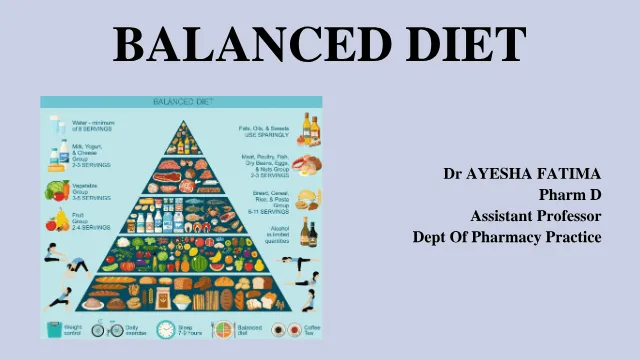
- Slide 11. 2. Nutrition • Proper nutrition is essential for normal physical growth, brain development, immune function, and overall health throughout childhood. Establishing healthy eating habits early in life provides lifelong health benefits and reduces the risk of chronic diseases. • A balanced diet should supply adequate amounts of: 1. Carbohydrates 2. Proteins 3. Healthy fats 4. Vitamins 5. Minerals 6. Dietary fiber 7. Water • Children should be encouraged to consume fruits, vegetables, whole grains, milk, dairy products, eggs, fish, lean meat, and nuts while limiting foods high in fat, sugar, and salt.
- Slide 13. Daily Calorie Requirement ⮚ Children require adequate calories to support growth, development, and daily physical activities. ⮚ A simple method for estimating calorie requirements for children up to five years of age is: Daily calories = 1000 + (100 × Age in years) • For example: 1. 1-year-old child: approximately 1100 kcal/day 2. 2-year-old child: approximately 1200 kcal/day 3. 3-year-old child: approximately 1300 kcal/day • Calorie requirements vary depending on body size, growth rate, and activity level.
- Slide 17. Infant Feeding 1. Breastfeeding Breastfeeding is the preferred method of infant feeding. Exclusive breastfeeding is recommended during the first six months of life because breast milk provides complete nutrition and protects against infections. 2. Infant Formula When breastfeeding is not possible or is insufficient, commercially prepared iron-fortified infant formula is recommended. Infant formulas: 1. Provide essential nutrients. 2. Help prevent iron-deficiency anemia. 3. Should be used under medical guidance. 4. Should not be replaced with homemade formulas because they may be nutritionally inadequate or unsafe. 5. Formula-fed infants generally do not require additional vitamin supplementation.
- Slide 19. Preparation of Infant Formula 1. Proper preparation is essential to ensure safety. 2. Follow the manufacturer's mixing instructions exactly. 3. Use boiled and cooled water, especially during the first three months. 4. Sterilize feeding bottles and utensils before use. 5. Check the expiry date before preparing formula. 6. Store formula according to the manufacturer's instructions. 7. Discard leftover formula after feeding. 8. Do not heat formula directly on the stove or in a microwave. 9. Warm bottles by placing them in lukewarm water. 10. Never leave a baby unattended with a propped bottle because of the risk of choking.
- Slide 20. Introduction of Solid Foods Breast milk or formula alone becomes insufficient to meet all nutritional requirements after six months of age. • Current recommendations include: 1. Exclusive breastfeeding for the first 6 months . 2. Introduce complementary foods at 6 months while continuing breastfeeding. 3. Suitable first foods include: 1. Iron-fortified cereals 2. Pureed vegetables 3. Pureed fruits 4. Mashed pulses 5. Pureed chicken or meat 6. Cottage cheese 4. Initially: Begin with one teaspoon once or twice daily. 5. Gradually increase both quantity and variety. 6. Introduce one new food at a time. 7. Observe for allergic reactions. 8. Ensure homemade foods are soft, mashed, or pureed until chewing develops. 9. Parents should consult healthcare professionals before introducing complementary foods.
- Slide 22. Role of Pharmacists in Child Nutrition • Pharmacists contribute to child nutrition by: 1. Stocking appropriate infant formulas and baby foods. 2. Counseling parents on breastfeeding and formula feeding. 3. Demonstrating correct formula preparation. 4. Explaining bottle sterilization techniques. 5. Advising on age-appropriate complementary feeding. 6. Educating parents about balanced nutrition and prevention of nutritional deficiencies.
- Slide 23. 3. Oral Hygiene Good oral health is essential for overall health and well-being. Dental caries (tooth decay) is one of the most common childhood diseases but is largely preventable through proper oral hygiene and healthy dietary habits. Risk factors include: 1. Frequent consumption of sugary foods and drinks. 2. Poor brushing habits. 3. Inadequate fluoride exposure. 4. Poor dental care. Children should: 1. Brush teeth twice daily with fluoride toothpaste. 2. Reduce sugary snacks and beverages. 3. Visit a dentist regularly. 4. Maintain proper oral hygiene from the eruption of the first tooth.
- Slide 25. Role of Community Pharmacists in Oral Health Community pharmacists promote oral health by: 1. Educating parents about proper oral hygiene. 2. Recommending fluoride toothpaste and fluoride supplements when appropriate. 3. Advising on sugar-free medicines and lozenges. 4. Encouraging the use of drinking cups instead of prolonged bottle feeding. 5. Providing guidance on denture hygiene when necessary. 6. Referring patients with persistent mouth ulcers or oral lesions to dentists. 7. Participating in oral health awareness programs and dental camps. 8. Providing analgesics for temporary relief of dental pain and referring patients for definitive treatment
- Slide 27. 4. Healthy Habits in Children ⮚ Healthy habits established during early childhood often continue throughout life. ⮚ Parents and caregivers should consistently encourage behaviors that promote physical and mental well-being. a. Good Hand Washing Proper hand washing is one of the simplest and most effective methods of preventing infectious diseases. Children should wash their hands: 1. Before eating. 2. After using the toilet. 3. After changing nappies. 4. After coughing or blowing the nose. 5. After playing outdoors. 6. After handling toys or animals. 7. Hand washing with soap and clean water removes dirt and disease-causing microorganisms.
- Slide 28. b. Adequate Sleep Adequate sleep is essential for: 1. Physical growth. 2. Brain development. 3. Learning and memory. 4. Emotional well-being. 5. Good concentration and behavior. Sleep requirements vary according to age, but children should maintain regular sleep schedules. c. Healthy Eating Children should consume a balanced diet containing: 1. Fruits and Vegetables 2. Milk and dairy products 3. Eggs 4. Fish 5. Chicken 6. Meat 7. Whole grains 8. Nuts Meals should be regular, nutritious, and balanced. Multivitamin supplementation may be considered for children with poor dietary intake under medical advice. d. Regular Physical Activity Regular exercise promotes: 1. Healthy growth. 2. Strong bones and muscles. 3. Cardiovascular fitness. 4. Healthy body weight. 5. Better mental health. Children aged 2 years and older should participate in at least 30 minutes of enjoyable moderate-intensity physical activity every day. Sedentary activities such as excessive television viewing, mobile phone use, and video games should be limited. Adequate water intake should also be encouraged during physical activity.
- Slide 29. Health Promotion and Care for Pregnant Women and Breastfeeding Mothers 1. Pregnancy is a critical period that requires proper medical care to ensure the health of both the mother and the developing fetus. 2. Good prenatal (antenatal) care reduces maternal complications and fetal mortality. 3. The main goal of prenatal care is to ensure the safe delivery of a healthy baby.
- Slide 30. Antenatal (Prenatal) Care 1. Early Confirmation of Pregnancy 1. Pregnancy can be confirmed using home pregnancy test kits. 2. A gynecologist can detect pregnancy as early as 8–9 days after fertilization. 3. Early diagnosis allows timely initiation of antenatal care. 2. First Antenatal Visit During the first visit, the healthcare provider performs a complete assessment. • Maternal Assessment 1. Measurement of: Blood pressure , Height, Weight 2. Assessment of overall health status. 3. Review of medical and obstetric history. 4. Laboratory Investigations Pelvic Examination 1. Evaluation of the uterus (womb) size. 2. Assessment of reproductive organs. 3. Confirmation of pregnancy progression. Estimation of Gestational Age 1. Calculated using the Last Menstrual Period (LMP). 2. Expressed in completed weeks of gestation. 3. Helps determine: 1. Expected Date of Delivery (EDD) 2. Growth of the fetus 3. Schedule of antenatal visits. 1. Blood tests 1. Blood group and Rh typing 2. Hemoglobin estimation 3. Screening for infections 4. Screening for diseases such as diabetes and hepatitis (as indicated) 2. Urine tests 1. Sugar 2. Protein 3. Urinary tract infection
- Slide 31. Health Promotion During Pregnancy 1. Balanced Nutrition 1. Consume a balanced diet rich in: 1. Proteins 2. Iron 3. Calcium 4. Folic acid 5. Vitamins 2. Drink adequate fluids. 3. Maintain appropriate weight gain. 4. Good nutrition promotes healthy fetal growth and maternal well-being. 2. Adequate Rest and Sleep 1. Ensure sufficient sleep every day. 2. Avoid excessive physical and mental stress. 3. Proper rest improves maternal health and fetal development. 3. Regular Physical Activity 1. Perform moderate exercise as advised by the doctor. 2. Benefits include: 1. Better circulation 2. Reduced back pain 3. Easier labor 4. Improved physical fitness 4. Avoid Harmful Habits Pregnant women should avoid: 1. Smoking 2. Alcohol consumption 3. Tobacco products 4. Recreational drugs 5. Self-medication 6. Unnecessary Over-the-Counter These substances may cause: 1. Birth defects 2. Poor fetal growth 3. Premature birth 4. Miscarriage 5. Regular Antenatal Check-ups Regular visits help monitor: 1. Maternal blood pressure 2. Weight gain 3. Fetal growth 4. Fetal heartbeat 5. Early detection of pregnancy complications
- Slide 32. Importance of Prenatal Care 1. Detects pregnancy complications early. 2. Reduces maternal mortality. 3. Decreases fetal mortality. 4. Promotes healthy fetal development. 5. Improves maternal health. 6. Ensures safe pregnancy and delivery. 7. Provides individualized care according to maternal needs.
- Slide 33. Breastfeeding After Delivery Importance of Breastfeeding 1. Breastfeeding benefits both the mother and the baby. 2. Breast milk is the ideal nutrition for infants. Colostrum 1. Colostrum is the first milk produced after childbirth. 2. Thick, yellowish, and highly nutritious. 3. Rich in: 1. Antibodies (especially IgA) 2. Proteins 3. Immune cells 4. Provides passive immunity. 5. Protects the newborn from infections. Benefits of Breastfeeding for the Baby 1. Provides complete nutrition. 2. Easily digested. 3. Strengthens the immune system. 4. Reduces infections (diarrhea, respiratory infections). 5. Promotes healthy growth and development. 6. Enhances emotional bonding with the mother. Benefits of Breastfeeding for the Mother 1. Promotes mother–baby bonding. 2. Increases maternal confidence and self-esteem. 3. Helps uterine contraction after delivery. 4. Reduces postpartum bleeding. 5. Lowers the risk of breast cancer. 6. May reduce the risk of ovarian cancer. 7. Helps in weight reduction after pregnancy.
- Slide 34. Role of the Pharmacist in Counseling Pregnant Women The pharmacist plays an important role in promoting maternal and fetal health. During Pregnancy 1. Dispense safe and quality medicines. 2. Educate women about the safe use of medications during pregnancy. 3. Counsel against self-medication. 4. Advise against unnecessary OTC drugs. 5. Explain the importance of: 1. Balanced diet 2. Adequate rest 3. Proper sleep 4. Regular exercise 6. Educate about avoiding: 1. Smoking 2. Alcohol 3. Tobacco 4. Harmful substances 7. Reinforce adherence to prescribed medications (e.g., iron, folic acid, calcium). 8. Encourage regular antenatal check-ups.
- Slide 35. After Delivery 1. Educate mothers about the importance of exclusive breastfeeding for the first 6 months. 2. Explain the benefits of colostrum. 3. Counsel on correct breastfeeding techniques. 4. Provide advice regarding infant formula only when breastfeeding is not possible. 5. Inform mothers that some medicines are excreted into breast milk. 6. Advise consultation with healthcare professionals before taking any medicine while breastfeeding. 7. Monitor for medicines that may affect the infant through breast milk.
- Slide 36. Health Promotion and Health Care of Geriatric Patients • Geriatrics is the branch of medicine concerned with the clinical, preventive, rehabilitative, and social aspects of health and illness in older adults. • Elderly generally refers to individuals 60 years of age and above. • India is undergoing a demographic transition, resulting in a rapid increase in the elderly population. • Average life expectancy has increased significantly and is expected to improve further. • India has one of the largest elderly populations in the world, and by 2050, elderly individuals are expected to constitute a major proportion of the global aging population. • Increased longevity has created new challenges in maintaining health, independence, and quality of life among older adults. • Health promotion in geriatrics refers to helping older adults maintain good physical, mental, and social health, prevent diseases, delay disability, and improve their quality of life.
- Slide 38. Need for Health Promotion for Geriatrics • Increasing life expectancy has resulted in: 1. Increased prevalence of chronic diseases 2. Functional disability 3. Polypharmacy 4. Greater healthcare utilization 5. Reduced quality of life 6. Increased healthcare costs • Therefore, health promotion focuses on healthy ageing rather than merely increasing lifespan.
- Slide 40. Burden of Non-Communicable Diseases (NCDs) • One of the major determinants of health in old age is the presence of chronic non-communicable diseases • Common NCDs include: 1. Hypertension 2. Diabetes mellitus 3. Coronary heart disease 4. Stroke 5. Chronic obstructive pulmonary disease (COPD) 6. Cancer 7. Arthritis 8. Osteoporosis • These diseases are responsible for: 1. Disability 2. Functional dependence 3. Reduced quality of life 4. Increased mortality
- Slide 41. Life-Course Approach ⮚ WHO recommends a life-course approach for preventing NCDs. ⮚ Risk factors for chronic diseases begin much earlier than old age. ⮚ They may originate during: 1. Pregnancy (maternal health) 2. Childhood 3. Adolescence 4. Adult life Therefore, healthy lifestyle practices throughout life help delay or prevent diseases in old age.
- Slide 43. Major Modifiable Risk Factors • The major lifestyle factors responsible for NCDs include: 1. Physical inactivity 2. Unhealthy diet 1. High calories 2. High sugar 3. High saturated fat 4. Excess salt 5. Low intake of fruits and vegetables 3. Tobacco use 4. Alcohol consumption 5. Obesity 6. Sedentary lifestyle Relationship Between Risk Factors and Diseases Risk Factor Diseases Tobacco use Cancer, COPD, Heart disease, Stroke Physical inactivity Diabetes, Coronary heart disease, Stroke Unhealthy diet Obesity, Diabetes, Hypertension, Heart disease Alcohol Liver disease, Hypertension, Stroke, Certain cancers
- Slide 45. Health Transition in India • India is currently experiencing: 1. Rapid urbanization 2. Industrialization 3. Lifestyle changes 4. Population ageing • As a result: • Non-communicable diseases have become the leading cause of illness. • India is known as the "Diabetes Capital of the World." • India carries approximately one-fourth of the world's burden of coronary heart disease. • Indians develop diabetes and coronary artery disease at a younger age than many developed countries. • Survivors therefore live with disability for a longer period.
- Slide 46. Expansion of Morbidity Although life expectancy is increasing, many elderly spend more years living with chronic illness. This phenomenon is known as: • Expansion of Morbidity 1. Instead of compressing illness into the last few years of life, chronic diseases now extend over many years. 2. Therefore, emphasis should be on: 3. Prevention 4. Early diagnosis 5. Lifestyle modification 6. Regular screening
- Slide 48. Goals of Health Promotion in Geriatrics 1. Promote healthy ageing 2. Prevent chronic diseases 3. Delay disability 4. Maintain independence 5. Improve quality of life 6. Reduce hospitalization 7. Reduce healthcare expenditure 8. Promote active ageing
- Slide 49. Medication Use in Older Adults • Older adults are the largest consumers of medicines , including both prescription and over-the-counter (OTC) drugs. • Reasons include: 1. Multiple chronic diseases 2. Long-term therapy 3. Multiple physicians 4. Frequent hospital visits • Older adults often take five or more prescription medicines daily. • Many also consume OTC medications, vitamins, herbal medicines, and nutritional supplements. This increases the risk of: 1. Polypharmacy 2. Drug interactions 3. Adverse drug reactions 4. Medication errors 5. Poor adherence
- Slide 52. Polypharmacy Use of OTC Medicines • Polypharmacy is the use of five or more medications simultaneously. • Consequences 1. Drug-drug interactions 2. Drug-food interactions 3. Drug-disease interactions 4. Falls 5. Confusion 6. Hospitalization 7. Increased mortality 8. Poor medication adherence Many elderly believe OTC medicines are completely safe. However, 1. Many prescription medicines have now become OTC medicines. 2. OTC medicines can produce significant physiological effects. 3. They may interact with prescription drugs. 4. Herbal medicines and dietary supplements may also cause serious interactions. Therefore, OTC medicines should be used cautiously.
- Slide 54. Common Drug-Related Problems in Elderly • Older adults should immediately consult a healthcare professional if they experience: 1. Dizziness 2. Constipation 3. Diarrhea 4. Stomach upset 5. Blurred vision 6. Sleep disturbances 7. Mood changes 8. Skin rashes 9. Unusual weakness 10. Confusion • These symptoms may indicate adverse drug reactions rather than ageing itself.
- Slide 56. Safe Medication Practices for Older Adults Practice Recommendation Inform Your Doctor/Pharmacist Tell them about all prescription medicines, OTC drugs, vitamins, herbal products, and allergies. Use One Pharmacy Get all medicines from the same pharmacy to avoid drug interactions. Watch for Side Effects Report dizziness, rashes, stomach upset, blurred vision, or other unusual symptoms. Know Your Medicines Learn the name, dose, timing, purpose, and possible side effects of each medicine. Review Medicines Regularly Bring all your medicines during doctor visits for review. Follow Instructions Take medicines exactly as prescribed and read the label carefully. Use Reminder Aids Use a pill box, calendar, or alarm to remember your medicines. Avoid Self-Medication Do not start or stop medicines without consulting your doctor or pharmacist.
- Slide 58. Role of Pharmacist in Geriatric Care Role Responsibilities Patient Counseling Educate elderly patients about their diseases, medicines, dosage, side effects, and the importance of medication adherence. Medication Review Review all medicines regularly to identify polypharmacy, drug interactions, duplicate therapy, and adverse drug reactions. Health Screening Monitor blood pressure, blood glucose, body weight, and other basic health parameters. Medication Adherence Encourage patients to take medicines correctly and use pill boxes, calendars, or alarms as reminders. Lifestyle Counseling Advise on a healthy diet, regular exercise, smoking cessation, alcohol reduction, stress management, and personal hygiene.
- Slide 59. OTC and Herbal Medicine Guidance Counsel patients on the safe use of over-the-counter medicines and herbal supplements to avoid harmful interactions. Home Medication Review Assess medicines at home for proper storage, adherence, expired drugs, and medication-related problems. Collaboration with Physicians Communicate with doctors regarding drug-related problems, dose adjustments, adverse effects, and therapeutic alternatives. Health Education Conduct health awareness programs, group counseling, and senior citizen education sessions to promote healthy ageing. Promote Healthy Ageing Encourage regular health check-ups, vaccination, disease prevention, and healthy lifestyle practices to improve quality of life.