Comprehensive Overview of Health, WHO's Role, and Pharmacist's Contribution to Health Promotion
Presentation30 slidesB.Pharm, Pharm.D
Loading…
About this presentation
Explore WHO's health definitions, objectives, global health strategies, and the critical role pharmacists play in health promotion, disease prevention, and patient education to improve community health outcomes.
- WHO
- health promotion
- public health
- disease prevention
- pharmacist's role
Text of these slides
- Slide 1. Concept of Health and Health Promotion Role of Pharmacist in Health Promotion Prepared by Dr. Ayesha Fatima Assistant Professor Dept of Pharmacy Practice
- Slide 3. WHO Definition of Health "Health is a state of complete physical, mental and social well-being and not merely the absence of disease or infirmity." 4. Not Merely the Absence of Disease 1. A person may have no disease but still may not be healthy. 2. Health includes overall quality of life. 3. Physical, mental and social health are equally important. 1. Complete Physical Well-being 1. Body functions normally. 2. Free from illness and disability. 3. Good nutrition and adequate physical fitness. 4. Ability to perform daily activities efficiently. 5. Proper growth and development. 2. Complete Mental Well-being 1. Ability to think clearly and make sound decisions. 2. Emotional stability. 3. Ability to cope with stress and challenges. 4. Positive self-esteem. 5. Freedom from anxiety, depression and other mental illnesses. 3. Complete Social Well-being 1. Good relationships with family, friends and society. 2. Ability to communicate effectively. 3. Social acceptance and participation. 4. Productive contribution to the community. 5. Healthy work-life balance.
- Slide 7. Need for WHO • Health challenges differ among countries because of: 1. Population growth 2. Poverty 3. Malnutrition 4. Infectious diseases 5. Lifestyle diseases 6. Environmental pollution 7. Climate change 8. Aging population Therefore WHO: 1. Develops global health strategies. 2. Designs health programmes. 3. Supports member countries. 4. Coordinates international disease control. 5. Promotes universal health coverage.
- Slide 8. Objective of WHO • The major objective of WHO is: 1. To attain the highest possible level of health for all people across the world. 2. Promote health equity among nations. 3. Reduce disease burden globally. 4. Improve quality of life.
- Slide 10. 1. Providing Guidance and Advocacy for Health WHO provides leadership in global health by: 1. Developing health policies. 2. Promoting ethical healthcare. 3. Encouraging Evidence-Based Medicine (EBM). 4. Advising governments during health emergencies. 5. Supporting disease prevention programmes. 2. Stimulation of Appropriate Health Technology WHO promotes: 1. Affordable healthcare technology. 2. Safe medical equipment. 3. Appropriate medicines. 4. Modern diagnostic techniques. 5. Digital health innovations. 6. Technology suitable for developing countries. Purpose: 1. Improve healthcare delivery. 2. Reduce healthcare costs. 3. Increase access to quality treatment. 3. Setting Global Norms and Standards WHO develops international standards for: 1. Medicines 2. Vaccines 3. Medical devices 4. Laboratory testing 5. Disease diagnosis 6. Infection control 7. Food safety 8. Drinking water quality Purpose: 1. Ensure safe and effective healthcare worldwide. 4. Information Management WHO collects and manages health information by: 1. Monitoring diseases worldwide. 2. Maintaining health databases. 3. Publishing research reports. 4. Disease surveillance. 5. Early warning systems for outbreaks. 6. Sharing scientific information with countries. Purpose: 1. Help governments make informed health decisions.
- Slide 11. 5. Negotiation and Sustenance of National and Global Partnerships WHO works together with: 1. National governments 2. International organizations 3. NGOs 4. Healthcare institutions 5. Universities 6. Researchers 7. Public health agencies 8. Purpose: 9. Strengthen international cooperation. 10. Share knowledge. 11. Improve global health programmes. 6. Cooperation with Governments in Strengthening National Health Programmes (NHPs) WHO helps countries by: 1. Technical assistance. 2. Policy development. 3. Disease control programmes. 4. Health workforce training. 5. Emergency preparedness. 6. Monitoring programme performance. 7. Examples: 8. Tuberculosis control 9. HIV/AIDS programmes 10. Immunization programmes 11. Maternal and child health 12. Malaria control
- Slide 12. Achievements of WHO Major achievements include: 1. Improvement in global life expectancy. 2. Control of infectious diseases. 3. Expanded immunization programmes. 4. Smallpox eradication. 5. Polio control. 6. Maternal and child health programmes. 7. Development of international health guidelines. 8. Promotion of evidence-based healthcare. Life Expectancy 1. During the last century, average life expectancy increased by 20–40 years in many countries because of: 1. Better healthcare 2. Vaccination 3. Improved sanitation 4. Better nutrition 5. Disease prevention programmes WHO has made several important contributions in public health.
- Slide 13. HEALTH PROMOTION Health promotion is: The process of enabling people to increase control over their own health and improve it. WHO (2005) defined health promotion as: "The process of enabling people to increase control over their health and its determinants and thereby improve their health. Health promotion is more than treating diseases. It involves: 1. Preventing diseases. 2. Improving quality of life. 3. Encouraging healthy lifestyles. 4. Educating individuals. 5. Creating healthy environments. 6. Empowering people to make healthy decisions.
- Slide 17. LaLonde Report (Health Determinants) • The LaLonde Report identified four major determinants of health : 1. Human biology 2. Environment 3. Lifestyle 4. Healthcare services • These determinants collectively influence the health status of individuals and communities. Alameda County Study The Alameda County Study demonstrated that good health can be maintained through healthy lifestyle habits. Healthy practices identified include: 1. Regular physical exercise. 2. Adequate sleep. 3. Maintaining a healthy body weight. 4. Limiting alcohol consumption. 5. Avoiding smoking.
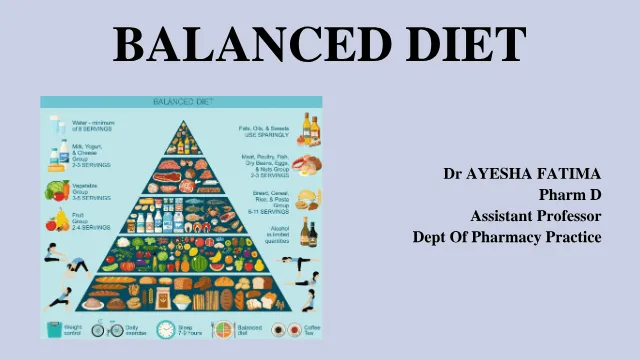
- Slide 18. Why Health Promotion is Needed Many factors influence health. Major determinants include: 1. Human Biology 1. Genetics 2. Age 3. Sex 4. Inherited diseases 4. Healthcare Services 1. Hospitals 2. Doctors 3. Pharmacists 4. Vaccination 5. Screening 6. Emergency care 2. Lifestyle 1. Healthy diet 2. Exercise 3. Sleep 4. Smoking 5. Alcohol consumption 6. Stress management 3. Environment 1. Clean water 2. Air quality 3. Housing 4. Sanitation 5. Pollution 6. Workplace safety
- Slide 20. Factors Responsible for Poor Health in Developing Countries (e.g., India) • Major causes include: 1. Malnutrition 2. Cigarette smoking 3. Tobacco chewing 4. Pan masala chewing 5. Alcohol consumption 6. Poor sanitation 7. Unhygienic living conditions 8. Illiteracy 9. Lack of health awareness 10. Poverty
- Slide 21. Importance of Health Promotion Health promotion helps to: 1. Prevent diseases. 2. Increase life expectancy. 3. Improve quality of life. 4. Reduce healthcare costs. 5. Promote healthy behaviour. 6. Improve community participation. 7. Reduce health inequalities. 8. Empower individuals.
- Slide 22. Classification of Health Promotion Activities Health promotion activities performed by pharmacists are classified into four major categories. Health Promotion Activity Purpose Examples 1. Promotion of Health and Well-being To maintain and improve overall health. Healthy diet, nutrition counselling, physical activity, stress management. 2. Identification of Illness To detect diseases at an early stage. Blood pressure check, blood glucose testing, cholesterol screening, health screening programmes. 3. Prevention of Illness To prevent diseases before they occur. Smoking cessation, immunization, travel health advice, hand hygiene education. 4. Maintenance of Health To help patients with chronic diseases maintain good health. Medication counselling, lifestyle modification, adherence counselling for asthma, diabetes, hypertension, etc.
- Slide 23. Possible Outcomes of Health Promotion Activities Outcome Meaning Total Compliance The individual completely follows the health advice. Partial (Varying Degree of) Compliance The individual follows some, but not all, of the recommendations. Total Non-compliance The individual does not follow the health advice.
- Slide 25. Models of Health Promotion • Different models are used to improve health by targeting different aspects of disease prevention and healthy living. Model Aim Examples Medical Approach To prevent and control diseases through medical interventions. Immunization, screening, health check-ups. Behavioural Change Approach To encourage healthy behaviour and lifestyle changes. Stop smoking, reduce alcohol intake, healthy diet, regular exercise. Educational Approach To increase knowledge and awareness about health. Health education leaflets, educational programmes, awareness campaigns. Patient-Centered Approach To involve patients in making decisions about their own healthcare. Patient counselling, shared decision- making. Self-Empowerment Approach (listed as a second Patient-Centered Approach in some textbooks) To enable individuals to take responsibility and control over their own health. Self-monitoring, self-care, disease management. Societal Change Approach To improve health by bringing positive changes in society and the environment. Smoke-free public places, promoting condom use, improving sanitation.
- Slide 26. Role of Pharmacists in Health Promotion Pharmacists play an important role in promoting health by educating patients, preventing diseases, supporting medication use, and encouraging healthy lifestyles. Role Main Purpose Sales of Goods Other Than Medicines Promote health through health-related products and public education. Sales of OTC Medicines Ensure safe self-medication and encourage healthy lifestyle practices. Prescription Medicines Improve treatment outcomes through counselling and disease-specific education. Responding to Symptoms Provide early guidance, recommend appropriate treatment, and refer when necessary.
- Slide 29. Role of Pharmacist Health Promotion Activities Examples 1. Sales of Goods Other Than Medicines • Supply health-related products. • Educate patients on their proper use. • Distribute health education materials such as leaflets, books, and pamphlets. • Create awareness about disease prevention and healthy lifestyles. • Children's toothpaste. • Ovulation testing kits. • Pregnancy test kits. • Oral hygiene products. • Leaflets on diabetes, AIDS, hypertension, and oral health. 2. Sales of Medicines (Especially OTC Medicines) • Recommend appropriate OTC medicines for minor ailments. • Counsel patients on correct dose, duration, and method of use. • Explain possible side effects and precautions. • Encourage healthy lifestyle changes along with medicine use. • Refer patients to a doctor when necessary. • Nicotine replacement therapy with smoking cessation counselling. • Medicines for fever, cough, cold, acidity, diarrhoea, and pain relief.
- Slide 30. 3. Prescription Medicines • Explain the correct use of prescribed medicines. • Improve medication adherence. • Monitor and counsel about adverse effects. • Provide disease-specific lifestyle advice. • Educate patients about long-term disease management and follow- up. • Foot care advice for diabetic patients. • Reduced sodium intake for hypertensive patients. • Correct inhaler technique for asthma patients. • Diet and exercise counselling for chronic diseases. 4. Responding to Symptoms • Assess minor symptoms presented by patients. • Recommend suitable treatment for minor illnesses. • Identify warning signs and refer serious cases to physicians. • Provide health education and preventive advice. • Distribute educational materials to improve public awareness. • Advice for travellers with diarrhoea or scurvy symptoms. • Counselling on hydration, hygiene, and nutrition. • Providing leaflets, books, and pamphlets on disease prevention and healthy living.