Steps of Patient Counselling: Patient Information Leaflet
Presentation52 slidesB.Pharm, Pharm.D
Loading…
About this presentation
Patient counselling is an essential component of pharmaceutical care and plays a vital role in ensuring the safe, effective, and rational use of medicines.
- patient counselling
- patient information leaflet
- medication adherence
- drug information
- medication safety
Text of these slides
- Slide 1. Patient Counselling Patient Information Leaflet Advisory Labels Prepared by Dr. Ayesha Fatima Pharm D Assistant Professor Dept of Pharmacy Practice
- Slide 2. • Health care includes medical care, pharmaceutical care, and nursing care. • In medical care, clinicians diagnose the disease, analyzing the signs and symptoms, lab results and radiological results prescribe the medications to treat the disease. • Patients take medicines regularly if they are informed about how important their medicines in bringing down the signs and symptoms. • Due to heavy patient load, often prescribers find difficulty in providing medication related information to the patients. • Due to lack of medication usage information, patients may tend to forget taking the medication or misuse the medications. • Pharmacists by virtue of their Pharmacotherapeutics knowledge are in the right position to give suitable advice to the patients regarding safe use of medications. • World Health Organization (WHO) and International Pharmaceutical Federation (FIP) identified patient counseling as one of the important professional responsibilities of the pharmacists.
- Slide 3. • Patient counselling refers to the process of providing information, advice and assistance to help patients use their medications appropriately. The information and advice is given by the pharmacist directly to the patient or to the patient's representative, and may also include information about the patient's illness or recommended lifestyle changes, The information is usually given verbally, but may be supplemented with written material. OR • Patient counseling is defined as "providing information to the patient or patient's care giver regarding the disease, medication, diet and life style modifications in layman language to achieve the desirable therapeutic outcomes". The information may he given verbally and complimented with written information leaflets. DEFINITION
- Slide 4. 1. To improve patient understanding of the illness 2. To explain the role of medication in treatment 3. To improve medication adherence 4. To ensure safe and effective use of medicines 5. To achieve optimal therapeutic outcomes 6. To reduce medication errors and adverse drug reactions 7. To reduce unnecessary health-care costs 8. To improve quality of life of the patient 9. To help patients cope with medication-related adverse effects 10. To improve professional rapport between pharmacist and patient Aims of Patient Counselling
- Slide 5. Need for Identifying Patients for Counseling ✔ In community pharmacies, pharmacists are often busy dispensing prescriptions, and patients may be in a hurry to receive their medications. ✔ Ideally, every patient should receive counseling on how to use their medicines correctly. ✔ However, due to time constraints and workload, it may not be feasible to counsel every patient in detail. ✔ Therefore, specific guidelines are used to identify patients who require priority counseling.
- Slide 6. Patients Requiring Counseling The following patients or caregivers should be given priority for counseling: 1. Patients or caregivers confused about medication use 2. Patients with impaired vision or hearing 3. Illiterate patients 4. Patients with changes in medication or dosage 5. New patients or first-time users of a medication 6. Parents or caregivers receiving medication for children 7. Patients using special dosage forms or devices 8. Patients receiving medicines with special requirements: Drugs with: Special storage condition, Complicated direction, Significant adverse effects
- Slide 7. Patients Who Should Be Counseled at Regular Intervals Some patients require ongoing and repeated counseling due to the chronic nature of their conditions or complexity of therapy: 1. Asthmatic patients: Proper inhaler technique and adherence are crucial. 2. Diabetic patients: Require education on insulin use, glucose monitoring, and lifestyle changes. 3. Patients taking four or more medications (polypharmacy): Higher risk of drug interactions and non- adherence. 4. Patients using medication-containing devices: Regular reinforcement of correct technique is required. 5. Epileptic patients: Emphasis on strict adherence to prevent seizures. 6. Patients with skin disorders: Correct application, duration, and avoidance of misuse of topical agents. 7. Patients misusing drugs: Need counseling to prevent abuse and improve safe use. 8. Terminally ill patients: Require compassionate counseling for symptom control and quality of life.
- Slide 8. Communication Skills for Effective Patient Counselling ⮚ Patient counselling is both an art and a science. ⮚ The counselling process mainly involves verbal and non-verbal communication. ⮚ Effective patient counselling depends on balanced verbal and non-verbal communication ⮚ Effective counselling requires: 1. Sound knowledge of diseases and medicines 2. Strong verbal and non-verbal communication skills 3. Continuous practice to improve counselling effectiveness ⮚ Good communication builds patient trust, improves medication adherence, and enhances therapeutic outcomes ⮚ With practice, pharmacists can develop excellent counselling skills and become effective patient educators
- Slide 9. 1. Language • Use simple, clear, and understandable language • Avoid unnecessary medical or technical terminology • Whenever possible, communicate in the patient’s own language 2. Tone • Tone reflects the attitude and emotions of the speaker • Changes in pitch and tone convey feelings • During counselling, the tone should be: • Caring • Calm • Reassuring I. Verbal Communication Skills ⮚ Verbal communication includes language and paralinguistic features such as tone, volume, pitch, and speed of speech. ⮚ Paralinguistics (how words are spoken) account for about 40% of how a message is received, influencing patient understanding significantly.
- Slide 10. 3. Volume ✔ Should be appropriate to the setting and patient ✔ Ideally counselling should be conducted in a quiet and private area ✔ Avoid speaking loudly unless necessary ✔ For patients with hearing impairment: ✔ Move closer ✔ Speak clearly ✔ Direct the voice towards the patient’s ear 4. Speed of Speech ✔ Rate of speech affects clarity and understanding ✔ Speaking too fast may: ✔ Discourage patient interaction ✔ Give the impression that the pharmacist is busy or uninterested ✔ Speaking too slowly may reduce patient interest ✔ Ideal speed: ✔ Clear ✔ Moderate ✔ Allows time for the patient to understand and remember information ✔ Information should be presented in a logical sequence
- Slide 11. Components of Non-Verbal Communication: 1. Proximity 2. Eye contact 3. Facial expressions 4. Head movements 5. Hand gestures 6. Body posture 7. Professional appearance 1. Proximity ⮚ Refers to the physical distance maintained during counselling ⮚ Classified into four zones: ⮚ Intimate: ≤ 45 cm ⮚ Personal: 45 cm – 1.2 m ⮚ Social: 1.2 – 3.6 m ⮚ Public: > 3.6 m ⮚ Healthcare professionals usually use intimate or personal distance during counselling II. Non-Verbal Communication Skill s Non-verbal communication includes body language and appearance. Approximately 50% of message interpretation comes from non-verbal cues.
- Slide 12. 2. Eye Contact ✔ Indicates interest, attention, and sincerity ✔ Listeners usually maintain more eye contact than speakers ✔ Some patients may avoid eye contact due to: ✔ Cultural reasons ✔ Shyness ✔ Sadness or depression ✔ Pharmacists should be sensitive and not force eye contact 3. Facial Expression ✔ Helps convey empathy, concern, and reassurance ✔ Smiling, nodding, and attentive expressions encourage patient interaction 4. Gestures and Body Posture ✔ Head nodding shows understanding and encouragement ✔ Hand gestures can help explain instructions ✔ Open and relaxed posture builds patient confidence
- Slide 13. Qualities of a good counsellor • Be a good listener. Counselling is an interactive process. The pharmacist must listen attentively to the patient and observe both verbal and non-verbal behavior. This gives the pharmacist an opportunity to assess the patient's knowledge about their disease and medications • Be flexible: The pharmacist should be flexible and provide advice and information which is tailored to the individual patient's needs and capabilities. • Be empathetic: The pharmacist should try to understand the patient's personal suffering and situation as if the problem was his or her own. • Be non-judgmental: The pharmacist should not judge the behavior of the patient based on their illness or the group he or she belongs to. • Be tolerant: During the course of counselling, patients may become agitated, unreasonable or hostile. The pharmacist should acknowledge the patient's feelings and be tolerant of these. • Communicate confidently : The pharmacist should speak confidently as this will improve the patient's acceptance of the pharmacist's advice.
- Slide 14. Steps of Patient Counselling • Patient counselling is a two-way communication process in which effective interaction between the pharmacist and the patient is essential to achieve safe and optimal therapeutic outcomes. • Patient counselling is a structured, interactive, and patient-centered process. Effective counselling improves medication adherence, minimizes drug-related problems, and enhances therapeutic outcomes. By following a systematic counselling approach, pharmacists play a vital role in improving patient safety and quality of life.
- Slide 15. • The counselling process is systematic and involves the following steps: 1. Preparing for the Counselling Session 2. Opening the Counselling Session 3. Counselling Content (Core of the Session) 4. Closing the Counselling Session 5. Documentation and Follow-up (Conclusion)
- Slide 16. 1. Preparing for the Counselling Session • Preparation is the foundation of successful patient counselling. The effectiveness of counselling depends largely on the knowledge, skills, and preparedness of the pharmacist. • Key Aspects of Preparation ⮚ The pharmacist should collect as much information as possible about: Patient’s disease condition, Prescribed medications and treatment regimen, Dosage form and special instructions ⮚ In hospital settings: Patient case notes and medical records can be reviewed ⮚ In community pharmacies: Information is obtained from: Prescription, Patient interview and Previous dispensing records (if available) ⮚ If the medication is unfamiliar, the pharmacist should: Refer to standard drug information sources before counselling begins
- Slide 17. • Assessment of Patient’s Condition ⮚ The mental and physical state of the patient should be assessed ⮚ Counselling may be ineffective if the patient is: In a hurry ✔ Experiencing pain ✔ Emotionally distressed ✔ Non-communicative ⮚ In such situations: ✔ Counselling goals may be modified ✔ Or, with patient consent, the session may be postponed to a later time
- Slide 18. 2. Opening the Counselling Session • This is the information-gathering phase and sets the tone for the entire interaction. • Introduction and Rapport Building ⮚ The pharmacist should: Introduce himself or herself clearly, Greet the patient politely, preferably by name ⮚ Example: "Hello Mr. Sreenivas, I am Ayesha, your pharmacist. I would like to explain your medications. Do you have a few minutes?” ⮚ This approach: Mentally prepares the patient , Builds trust and comfort • Purpose of the Session ⮚ Clearly explain: The purpose of counselling and What the patient can expect from the interaction
- Slide 19. • Gathering Patient Information ⮚ The pharmacist should assess: ⮚ Patient’s understanding of: Disease condition, Prescribed medications ⮚ Use of: Alternative therapies (Ayurveda, home remedies) ⮚ Past medical history, History of drug allergies ⮚ Lifestyle habits: Smoking, Alcohol consumption, Tobacco or pan masala use • Communication Techniques Used 1. Open-ended questions to encourage patient participation: “What did your doctor tell you about your illness?” “Can you tell me about the symptoms you are experiencing?” 2. Reflective questioning : 1. Uses patient’s own words to explore further 2. Example: “You mentioned feeling unwell last time—can you explain what happened?”
- Slide 20. • Professional Conduct During Opening ⮚ The pharmacist should avoid: ⮚ Interrupting the patient ⮚ Asking embarrassing or judgmental questions ⮚ Displaying moral judgments ⮚ Arguing or becoming aggressive ⮚ Making premature conclusions ⮚ Empathy and understanding are especially important when patients are anxious or distressed.
- Slide 21. 3. Counselling Content (Core of the Session) • This is the most important step, where the pharmacist provides individualized medication-related information. 7. Drug–drug and drug–food interactions 8. Correct storage conditions 9. Time required to show therapeutic benefit 10. What to do if a dose is missed 11. Special monitoring requirements: Blood tests, BP monitoring, glucose monitoring, etc. 12. Arrangements for refilling or obtaining further supplies 13. Lifestyle modifications: Diet, Exercise, Avoidance of alcohol or smoking 1. Name and strength of the medication 2. Reason for prescription 3. How to take the medication: Dose, Frequency & ROA 4. Expected duration of treatment 5. Expected benefits of therapy 6. Possible adverse effects: Common and serious side effects, When to seek medical attention
- Slide 22. • Customization of Information ⮚ Due to time constraints: Information should be prioritized, Tailored according to patient’s needs ⮚ Avoid medical jargon: Say “high blood pressure” instead of “hypertension” ⮚ Avoid assumptions: Some medicines (e.g., tricyclic antidepressants) may be used for conditions other than depression ⮚ Always confirm: “What did your doctor tell you about this medicine?” • Counselling Caregivers ⮚ When family members collect medicines: ⮚ Assess their knowledge of the patient’s condition ⮚ Provide appropriate counselling accordingly
- Slide 23. 4. Closing the Counselling Session • Closing ensures that counselling goals are achieved and reinforces understanding. ⮚ Checking Patient Understanding ⮚ Use feedback questions: “Can you tell me what this medicine is for?”, “How long should you take this medication?” ⮚ Addressing Patient Questions ⮚ Encourage patients to ask doubts: “Do you have any questions or concerns?” ⮚ Clarify misunderstandings ⮚ Summarization ⮚ If time permits: Summarize key points in a logical order ⮚ Provide: Contact details of the pharmacy, Encourage follow-up if further clarification is needed.
- Slide 24. 5. Documentation and Follow-up (Conclusion) ⮚ The pharmacist should maintain appropriate patient records, including: ⮚ Patient’s name, age, gender, address, and contact details ⮚ Medical history, disease conditions, allergies, and interactions ⮚ Complete list of medications and devices used ⮚ Pharmacist’s observations and counselling notes
- Slide 25. Patient Counselling for Special Population Groups • Patient counselling for special population groups requires modification of counselling methods to suit the patient’s physical, mental, social and educational abilities. • Effective counselling in these groups is achieved by using appropriate communication skills, counselling aids, advisory labels and follow-up strategies. 1. Children (Paediatric Patients) ✔ Counselling is usually directed to parents or caregivers. ✔ Use simple language and avoid medical terminology. ✔ Provide clear instructions regarding dose, duration and method of administration. ✔ Use patient information leaflets (PILs) and pictograms to improve understanding. ✔ Emphasize special methods of administration using advisory labels (e.g., dissolve in water, swallow whole). ✔ Reinforce instructions verbally and with written information.
- Slide 26. 2. Elderly Patients ✔ Speak slowly, clearly and confidently; allow enough time for understanding. ✔ Use larger print PILs and medication cards for patients on multiple medicines. ✔ Give counselling at regular intervals, especially for patients taking four or more medications. ✔ Use advisory labels for drowsiness, food–drug interactions and special administration. ✔ Assess hearing, vision and memory limitations during counselling. ✔ Encourage follow-up schedules to improve adherence. 3. Illiterate Patients ✔ Rely more on verbal counselling, pictograms, and audiovisual aids. ✔ Use demonstrations, especially for inhalers and other devices. ✔ Avoid written-only instructions. ✔ Repeat key messages and confirm understanding through patient feedback.
- Slide 27. 4. Patients with Visual or Hearing Impairment ✔ For visually impaired patients: Provide verbal explanations and medication organization aids, Use distinct advisory labels and verbal reminders. ✔ For hearing-impaired patients: Maintain eye contact, speak clearly and face the patient, Use written PILs and demonstrations. 5. Patients Using Special Dosage Forms or Devices (e.g., inhalers, rotahalers, sustained-release tablets) ✔ Demonstrate the correct method of use. ✔ Use advisory labels such as: “To be dissolved under the tongue”, “To be swallowed whole, not chewed” ✔ Provide repeated counselling at regular intervals. ✔ Use PILs with pictures to reinforce technique.
- Slide 28. 6. Chronically Ill Patients (e.g., diabetes, asthma, epilepsy, skin diseases) ✔ Require counselling at regular intervals. ✔ Focus on medication adherence, storage, missed doses and side effects. ✔ Use medication cards, PILs, and compliance aids. ✔ Encourage patients to ask questions and participate actively. 7. Terminally Ill Patients ✔ Use a caring, empathetic and non-judgemental tone. ✔ Keep counselling simple, supportive and reassuring. ✔ Focus on safe use, comfort, and understanding rather than overload of information. ✔ Involve caregivers in counselling. Patient counselling for special population groups is made effective by adapting communication style, using appropriate counselling aids, applying advisory labels, and providing regular follow-up. Tailoring counselling to individual patient needs improves understanding, medication adherence and overall treatment outcomes
- Slide 29. Barriers to Patient Counselling • Patient counselling may not take place effectively in community and hospital pharmacies due to several obstacles known as barriers. • These barriers prevent proper communication between the pharmacist and the patient. • The barriers to patient counselling are broadly classified into: 1. Patient-based barriers 2. Provider-based barriers 3. System-based barriers
- Slide 30. 1. Patient-Based Barriers These barriers arise due to factors related to the patient. i. Many patients in India are unaware that pharmacists can provide counselling ii. Patients generally depend on doctors for medication-related information iii. Patients may be in a hurry and unwilling to spend time in counselling iv. Gender differences may inhibit free communication v. Language barriers between pharmacist and patient vi. Low literacy levels make it difficult for patients to understand instructions vii. Lack of interest or motivation to receive counselling
- Slide 31. 2. Provider-Based Barriers These barriers are related to the pharmacist (healthcare provider). 1. Lack of knowledge about diseases and medicines 2. Inadequate counselling and communication skills 3. Lack of confidence in interacting with patients 4. Heavy workload and time constraints due to prescription filling 5. Lack of interest or commitment towards counselling 6. In India, many community pharmacists are Diploma holders, with limited clinical exposure 7. Lack of training and continuing professional development
- Slide 32. 3. System-Based Barriers These barriers arise from the healthcare system and regulatory framework. 1. Patient counselling is not legally mandatory in India 2. No reimbursement or counselling fee 3. Pharmacists are officially viewed mainly as dispensers 4. Lack of privacy in busy community and hospital pharmacies 5. Inadequate counselling space and trained staff 6. Busy pharmacy hours reduce time available for counselling 7. Regulatory and financial disincentives to provide counselling services
- Slide 33. Strategies to Overcome Barriers to Patient Counselling • Among all barriers, provider-based barriers are the easiest to modify. 1. Strategies to Overcome Patient-Based Barriers i. Use of simple oral and written instructions ii. Use of pictograms and visual aids iii. Use of multimedia and audiovisual materials iv. Providing information leaflets v. Use of compliance aids (pill boxes, calendars) vi. Tailoring prescription instructions to patient needs vii. Follow-up schedules to reinforce counselling viii. Encouraging patients to ask questions about their medicines
- Slide 34. 2. Strategies to Overcome Provider-Based Barriers i. Updating knowledge through continuous professional development ii. Improving counselling and communication skills through training iii. Developing confidence by initially focusing on: i. One disease ii. One group of medicines (e.g., antibiotics) iv. Asking simple opening questions like: i. “Have you used this medicine before?” v. Observing experienced pharmacists during counselling sessions
- Slide 35. 3. Strategies to Overcome System-Based Barriers i. Legalization of patient counselling as a professional responsibility ii. Introduction of a counselling fee or reimbursement/ incentives for patient counselling iii. Providing dedicated counselling space in pharmacies iv. Employing trained pharmacy staff v. Public awareness campaigns through media vi. Inclusion of counselling services in healthcare policies Barriers to patient counselling significantly affect medication adherence and therapeutic outcomes. By addressing patient-based, provider-based, and system-based barriers through education, training, legal support, and improved infrastructure, effective patient counselling can be successfully implemented in pharmacy practice.
- Slide 36. Counselling Aids • During patient counselling, information is often provided verbally. However, patients may forget or misunderstand verbal instructions over time. To overcome this, various counselling aids have been developed to support and reinforce patient education. • Counselling aids supplement verbal counselling and help patients understand, remember, and correctly follow their treatment regimen. • Importance of Counselling Aids 1. Reinforce verbal instructions 2. Improve patient understanding and recall 3. Enhance medication adherence 4. Allow patients to review information at their convenience 5. Assist caregivers and other healthcare professionals 6. Reduce medication errors
- Slide 37. Types of Counselling Aids 1. Medication Cards ⮚ Medication cards are written summaries of a patient’s medications ⮚ Especially useful for: Patients on multiple long-term medications, Elderly patients ⮚ Can be: Handwritten or Computer-generated ⮚ Uses of Medication Cards 1. Help patients organize their medication routine at home 2. Can be shown to other healthcare providers 3. Improve continuity of care 4. Must be updated whenever medication changes occur
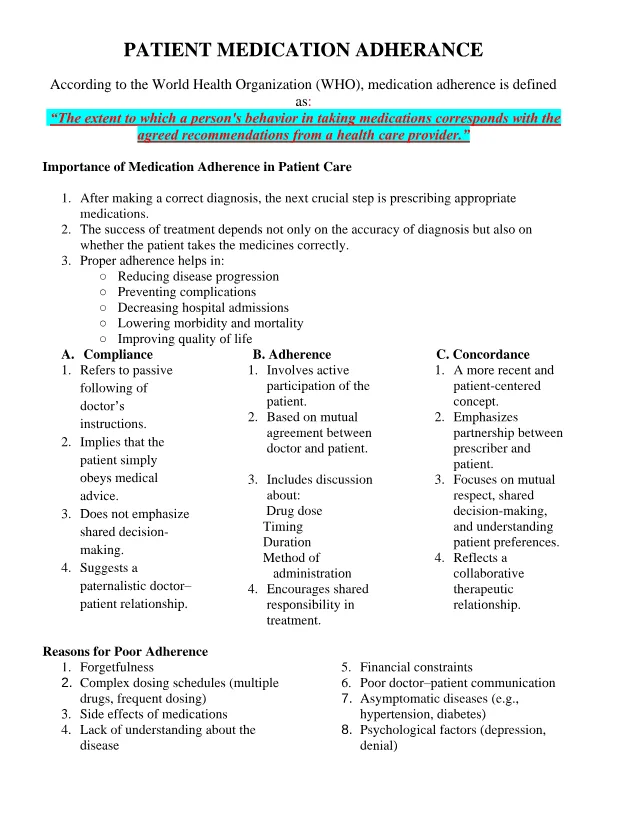
- Slide 38. 2. Patient Counselling and Medication Adherence • Medication Adherence: Medication adherence refers to the extent to which a patient’s medication-taking behavior matches medical advice. • Consequences of Poor Adherence 1. Treatment failure 2. Increased hospitalization 3. Increased healthcare costs 4. Reduced quality of life 5. Patients who receive proper counselling and written aids are more likely to adhere to treatment.
- Slide 39. 3. Patient Information Leaflet (PIL) • A Patient Information Leaflet (PIL) is a written document provided to patients or their caregivers that contains clear, simple, and accurate information about a medicine, its proper use, precautions, and related lifestyle advice. PILs are designed to supplement verbal counselling, not replace it. • PILs are also known as: • Consumer Medicine Information (CMI) • Consumer Product Information (CPI)
- Slide 40. • Purpose of Patient Information Leaflets 1. Reinforce verbal counselling 2. Improve patient understanding and acceptance of therapy 3. Promote safe and effective use of medicines 4. Enhance medication adherence 5. Reduce medication errors and adverse effects • Importance of PILs 1. Patients may forget verbal instructions over time 2. Printed information allows review at leisure 3. Useful for long-term therapy and chronic diseases 4. Helps caregivers and other healthcare providers 5. Particularly beneficial for literate patients
- Slide 41. • Role of PILs in Medication Adherence • Medication adherence refers to how closely a patient’s medication-taking behavior follows medical advice. • Poor adherence can result in: • Treatment failure • Increased hospitalisation • Increased healthcare costs • Decreased quality of life • Patients who are well informed through PILs are more likely to adhere to prescribed therapy.
- Slide 42. Essential Contents of a Patient Information Leaflet • A well-designed PIL should include the following information: 1. Name and description of the drug: Trade name, Generic name 2. Indications: Reason(s) for which the medicine is prescribed 3. Dosage details: Dosage form, Dose, Route of administration, Duration of therapy 4. Intended use and expected action: How the medicine works, What benefits to expect 5. Administration advice: How and when to take the medicine, Use with food or on an empty stomach, Special directions for use 6. Missed dose instructions: Action to be taken if a dose is missed 7. Precautions and contraindications: Conditions where caution is required, Situations where the medicine should not be used 8. Side effects: Common side effects, Serious or severe adverse effects, When to seek medical help
- Slide 43. 9. Drug and food interactions: Medicines or foods to avoid 10. Action if side effects occur: Steps to manage or report adverse effects 11. Self-monitoring advice: Techniques for monitoring therapy effectiveness or safety 12. Storage instructions: Temperature requirements, Protection from light or moisture, Special storage needs 13. Prescription refill information 14. Patient-specific comments: Information tailored to individual needs 15. Institution details: Name and contact information of the issuing institution: Author and date of publication
- Slide 44. • Characteristics of a Good PIL 1. Simple, non-technical language 2. Short sentences and common usage terms 3. Suitable for people with basic reading ability 4. Not excessively long 5. Typeface not too small 6. Regularly reviewed and updated • Development of PILs 1. Can be prepared by pharmacists using therapeutic knowledge 2. Should be written in the local language where possible 3. Must be peer reviewed for accuracy 4. In hospitals, approval from medical staff is recommended
- Slide 45. • Readability of PILs ✔ Flesch Reading Ease (FRE) Formula: Used to assess reading ease of English PILs. ✔ Formula: ✔ FRE = 206.84 − 0.85W − 1.02S ✔ Where: W = Number of syllables per 100 words, S = Average number of words per sentence ✔ Interpretation ✔ Score < 60 → Difficult to read ✔ Ideal score: 70–80 → Easy for general public ✔ Readability improves by: Using simple words, Writing short sentences
- Slide 46. ✔ Leaflets are open letters or postcards designed for wide distribution through: Clinics, Pharmacies, Newspapers, Public places ✔ Leaflets are Printed educational materials Distributed in pharmacies, hospitals, newspapers, and public places Designed to attract attention and convey reusable information ✔ Design Principles: Should be small and portable, Must combine words, pictures, and graphics, Easy to read and visually appealing ✔ Design Tasks for Leaflets: ✔ Decide content: Clear, focused, and persuasive message ✔ Text editing: Short paragraphs, Clear headings, Bullet points Highlight key information ✔ Picture design: Helps explain complex information ✔ Layout design: Logical placement of text and images, Appropriate color contrast Leaflets as a Form of PIL
- Slide 47. Layout and Design Guidelines for PILs Kitching Guidelines (1990) 1. Line length: 50–89 mm 2. Line spacing: ≥2.5 mm 3. Unjustified text preferred 4. Serif font is easier to read 5. Font size: ≥12 point 6. Indented first line improves reading speed 7. Avoid ALL CAPS in titles 8. Avoid italics 9. Use positive statements 10. Headings should stand out 11. Use Arabic numerals (1, 2, 3) 12. Numerals easier than words 13. Colour boxing not helpful 14. Pictures useful for complex procedures
- Slide 48. • Baker Able Leaflet Design (BALD) Criteria: Used to assess layout and design of PILs and PPIs. BALD criteria are commonly used to assess patient package inserts (PPI). • Includes: 1. Line length: 50–80 mm 2. Line spacing: >2.8 mm 3. Serif font 4. Font size: >12 point 5. Lower case titles 6. Minimal italics (0–3 words) 7. Positive advice 8. Standard headings 9. Arabic numerals 10. Minimal boxing (0–1 box) 11. Number of colours: ≤4 12. White space: >40% of page 13. Paper quality: >90 gsm
- Slide 49. Advisory Labels Patients require adequate and clear information to ensure that medicines are used safely and effectively. Advisory labels are additional warning or instruction labels affixed to medicine containers to guide patients regarding proper use, precautions, and safety measures.
- Slide 50. Sl. No. Category Situation / Indication Advisory Label Wording 1 For external use only Semisolid and solid preparations meant for external application (ointments, creams, pastes, dusting powders) For external use only 2 Not to be taken Preparations neither administered orally nor applied on skin Not to be taken 3 Drowsiness warning Drugs causing drowsiness, dizziness, blurred vision or impaired alertness Warning: May cause drowsiness. If affected do not drive or operate machinery. Avoid alcoholic drinks. 4 Food interaction Drugs better absorbed on an empty stomach Warning: To be taken one hour before food or on an empty stomach. 5 Food interaction Drugs causing gastric irritation or better absorbed with food Warning: To be taken with or after food. 6 Food interaction Antibiotics whose absorption is reduced by food or gastric acid Warning: To be taken one hour before food or on an empty stomach.
- Slide 51. 7 Alcohol interaction Drugs causing disulfiram-like reaction (e.g., metronidazole) Warning: Avoid alcoholic drinks. 8 Drug interaction Drugs chelating with calcium, magnesium, or iron Warning: Do not take milk or iron preparations with this medicine. 9 Drug interaction Drugs whose activity is reduced by aspirin Warning: Do not take aspirin while taking this medicine. 10 Special administration Drugs to be dissolved in the mouth Warning: To be sucked or chewed. 11 Special administration Sublingual drugs Warning: To be dissolved under the tongue. 12 Special administration Powders or granules to be dispersed in water Warning: Dissolve or mix with water before taking.
- Slide 52. 13 Special administration Enteric-coated, sustained-release or unpleasant-tasting formulations Warning: To be swallowed whole. Do not chew. 14 Caution in use Drugs causing photosensitization Warning: Avoid exposure of skin to direct sunlight. 15 Caution in use Drugs causing discoloration of urine or stool Warning: This preparation may colour the urine or stool. 16 Caution in use Preparations containing flammable solvents Warning: Keep away from naked flame.